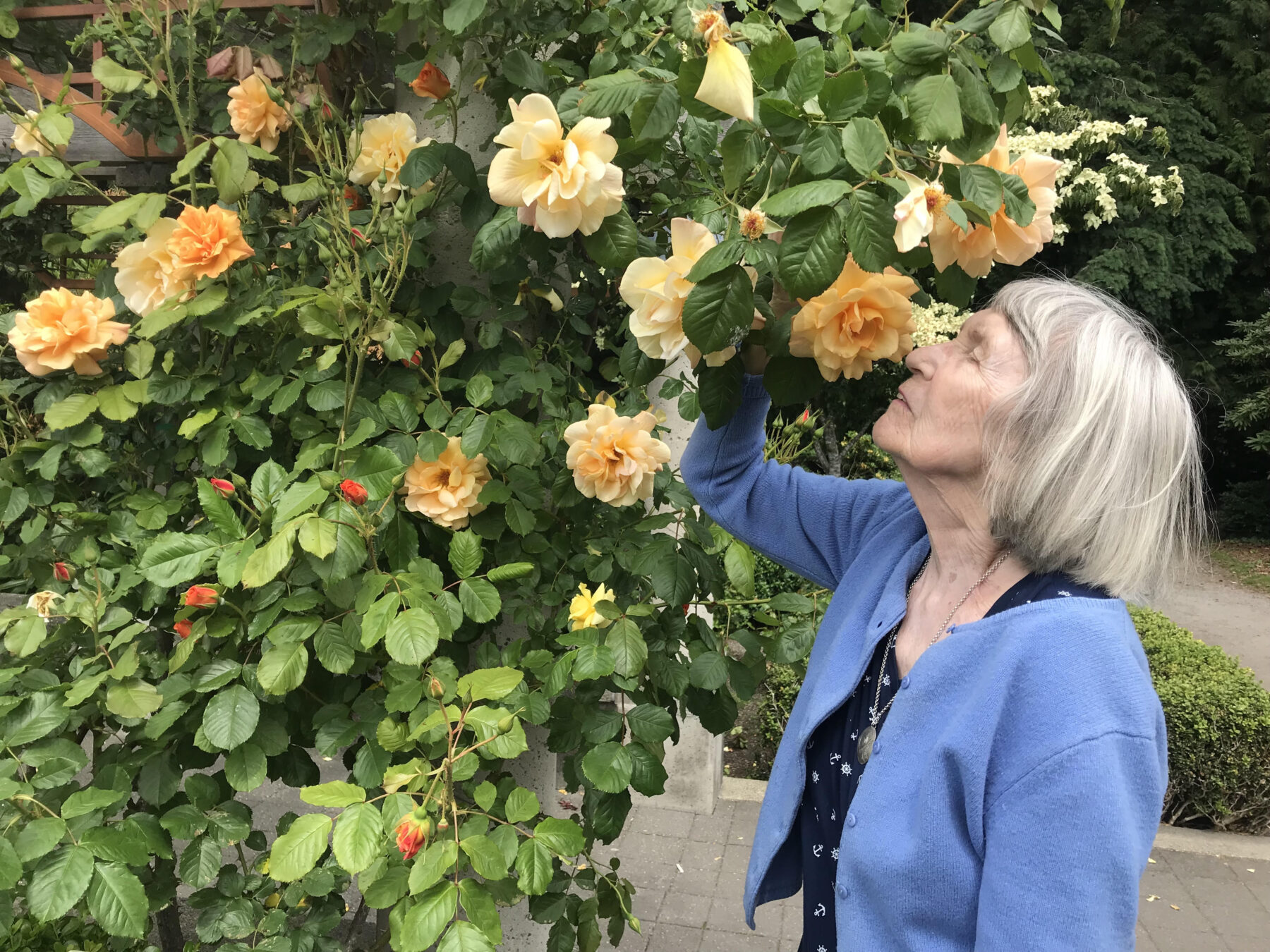
The recent passing of (Gladys) Maria Hindmarch leaves us bereft of her uncanny amazing gift of observance of everything (subjective, objective, speculative) and her prose’s gift — and labour — of absolute particularity, candour, accuracy, and persistence. There is nothing else like it because no one else could possibly do it. The energy, for one thing, to not just describe things/feelings in so much detail, but to make that detail vital, part of the living life of any moment of activity or sensation or thought. Olson’s dictum to “keep it moving” describes Maria’s prose and the thinking and feeling that it records, — gestures, words, thoughts, fantasies, emotions, memories — nothing is static in Maria’s “watery” world, and nothing exists outside of a relationship to something (or someone) else. It is entirely democratic writing, refusing hierarchies whilst really respecting a variety of skills. She notices the particularities of others, the way they do things or say things, or knowingly or unknowingly provoke desire or affection.
Her own life moves through episodes of employment, teaching, motherhood, friendships, illness, recovery, name change from Gladys to Maria, (though she never was able to shed “Gladys” completely, as far as her many friends were concerned), and growth into a focus and directness that was always also present in the sensibility of her early work. The energy of her style returns in the joyous memory piece, “Kitsilano 1963-69,” about living on York St. in Vancouver’s Kitsilano neighbourhood, then a renters’ haven for students, poets, painters, and writers. The word “community” could come to mind, but it was more (or other) than that. It was magic, it was generative, it was anarchic.
The sea — the Salish Sea — was her inspiration, her elemental twin. Born an Earth sign, she was gifted with the usual talents accruing. She was very sensible about real-world matters, but about the sea, she writes, “I feel like it’s part of me and I want to merge with it, to swim among the particles in the ocean of everchanging water and light.”
Candour, realism, and affection are some of the wonderful virtues that imbued the work and the life of Gladys Maria Hindmarch.
– Sharon Thesen
Maria was published often in The Capilano Review. Here are three pieces from the archive:
G. Maria Hindmarch / Fair Harbour My Eye
From Issue 1.12 (Fall 1977)
G. Maria Hindmarch / Tahsis: Holding my Breath to Japan
From Issue 1.45 (Winter 1987)
G. Maria Hindmarch / Kitsilano (1963-69)
From Issue 3.39 (Fall 2019)