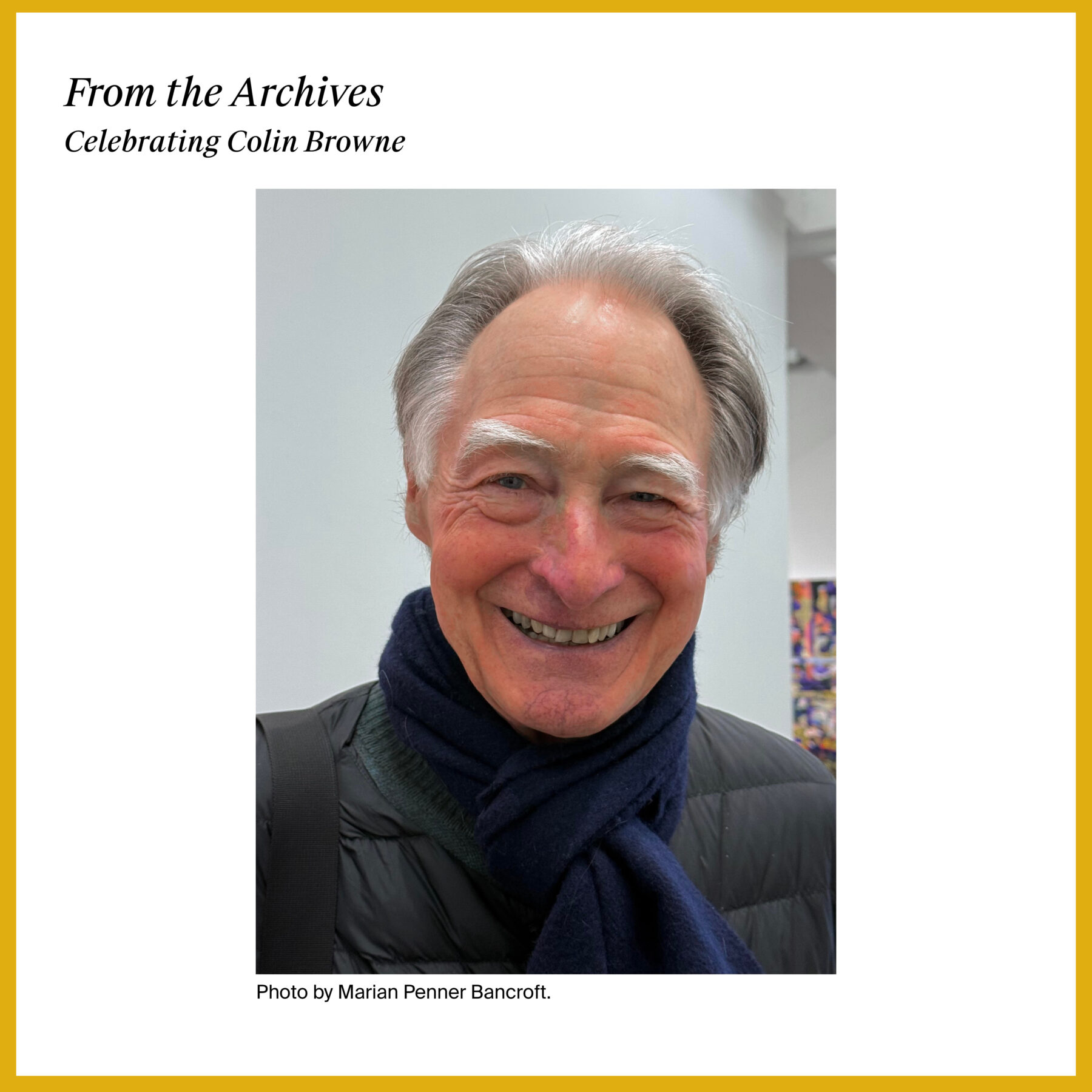
The Capilano Review sends warmest wishes to Colin Browne, our beloved ally and friend, board member and contributor, on his 80th birthday!
Our art & literature magazine is exceptionally lucky to be a beneficiary of Colin’s restless, inventive, and provocative attentions. Colin of boundless accomplishment as poet, art historian, filmmaker, librettist, archivist, teacher, and more, has appeared often in the pages of The Capilano Review, though rarely on his own behalf. More typically, his work turns outward. He looks for others – artists, poets, marginal or overlooked practices – and makes a case for their urgency.
The title of one of his pieces, “Translating Vancouver,” could stand in for his TCR presence altogether. He translates Vancouver and BC, makes the familiar strange, reminds us that place is never settled or singular. Vancouver and British Columbia emerge through his work as layered and contested, always in the process of being re-viewed and re-read.
Through interviews, reviews, and essays, Colin has expanded our sense of what and who belongs in our pages.
Here’s a small sample of his TCR pieces:
Issue 3.40 (Winter 2020)
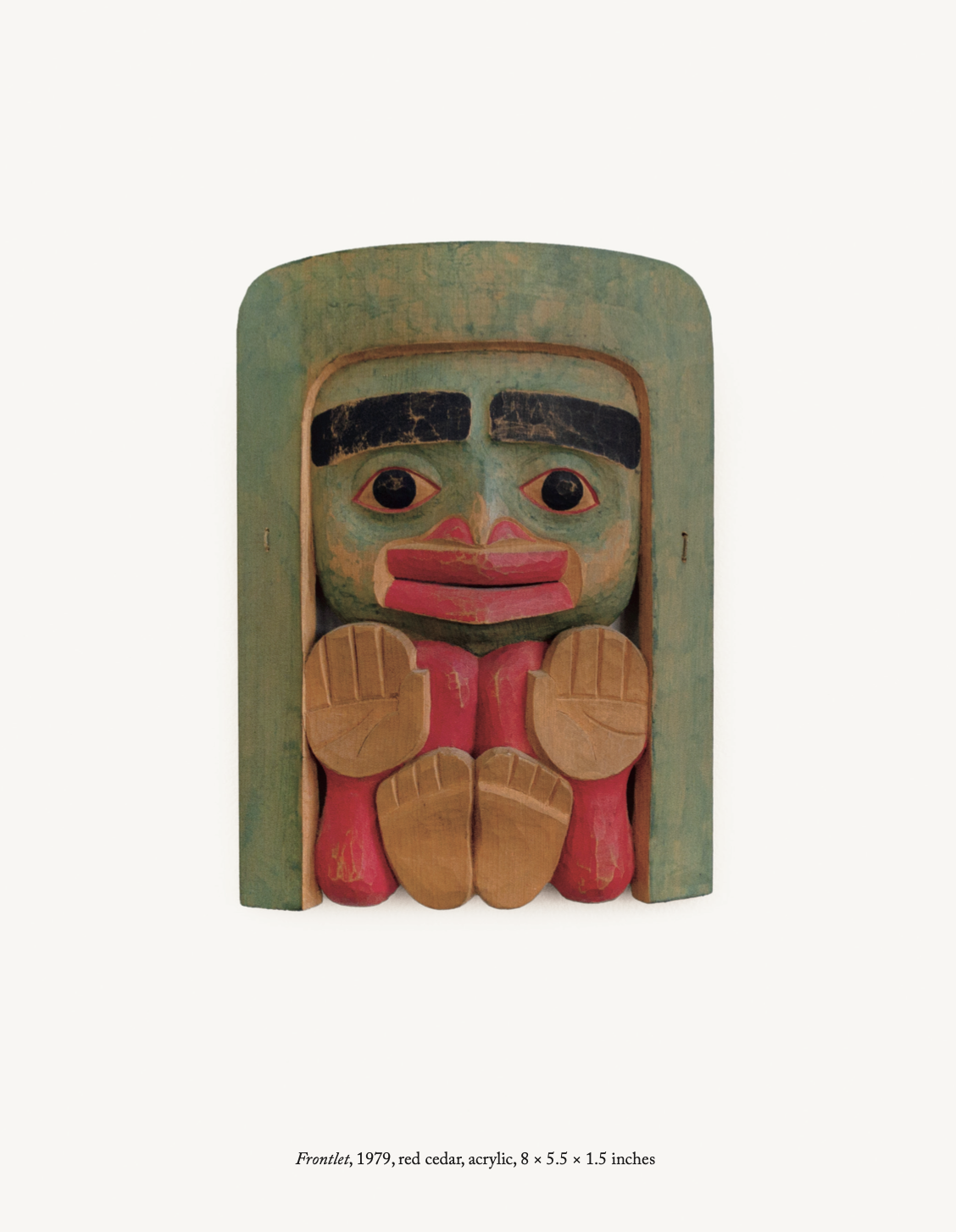
Colin introduces us to a magnificent selection of “Early Work” by Kwakwaka’wakw artist Chief Beau Dick:
“Beau Dick | Early Works brings together, in a photographic portfolio, fourteen works created by celebrated Kwakwaka’wakw artist and activist Chief Beau Dick, Walas Gwa’yam, between 1978 and 1980. He was at the time in his mid-twenties, and the works offer a unique glimpse into his artistic development… For years contemporary art institutions overlooked his achievements, as they did those of other Indigenous artists. As a result, a surprising number of Beau’s works have never received a public or discursive reception.
The brilliant youthful pieces included in Early Works have now been sold and dispersed. The desire to keep the memory of this important collection together, and to offer insight into the heart and mind of their maker, inspired this folio in The Capilano Review.”
Issue 3.36 (Fall 2018)
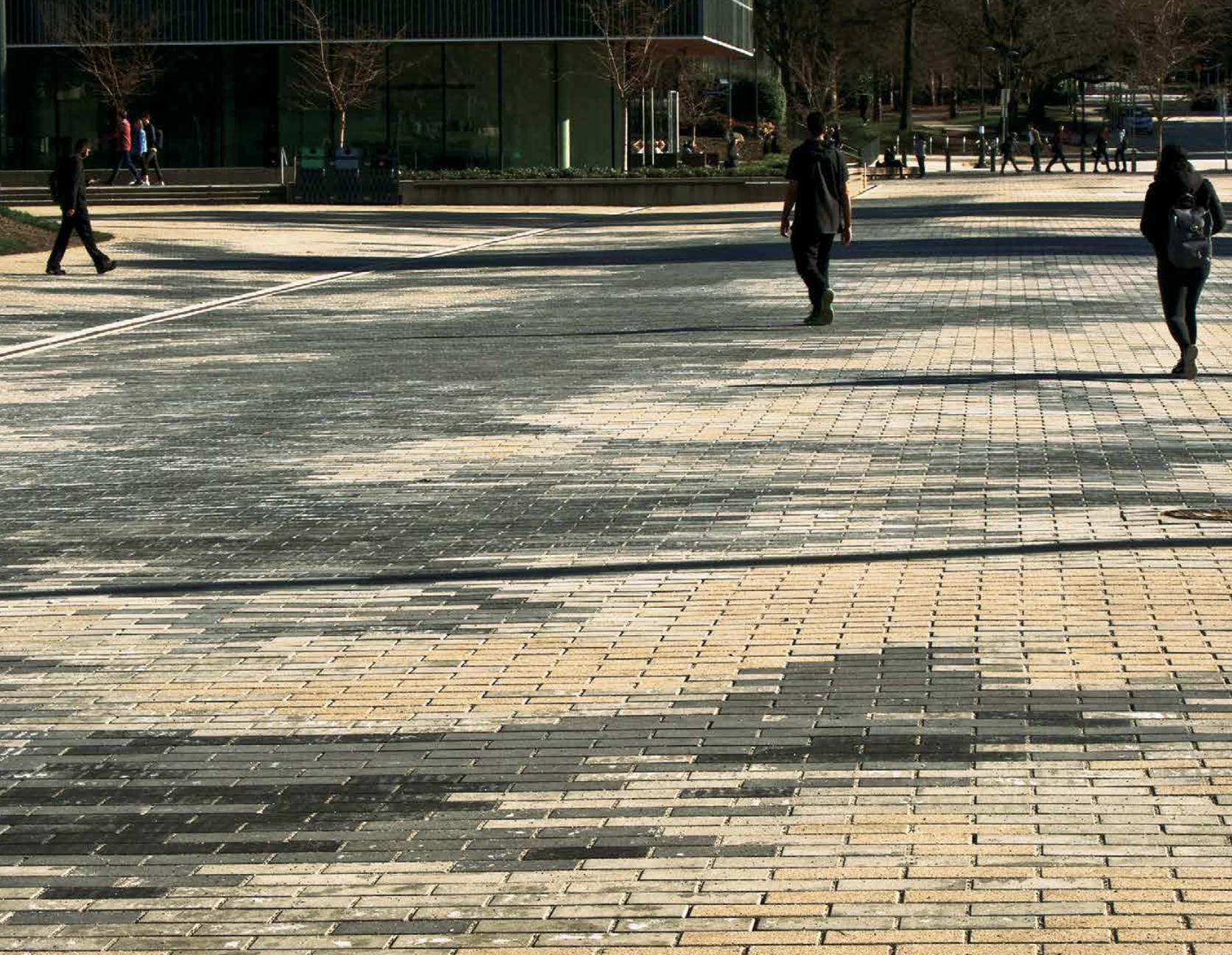
Thanks to Colin we discover that as we traverse the University Commons Plaza on the UBC Vancouver campus, we’re treading on The Shadow, Esther Shalev-Gertz’s fir tree depicted in 24,000 concrete paving stones:
Esther Shalev-Gertz “remember[s] walking along the Main Mall in UBC, absorbing the topography at the edge of the continent, looking up at the huge trees that line the pedestrian boulevard. I was struck by the vastness and the pronounced horizontality. It’s really beautiful. It’s elevating. As I was walking, the image of only the shadow of a large tree began to form in my mind.”
Issue 3.23 (Spring 2014)
This conversation between Ian Wallace and Colin Browne took place in Ian Wallace’s studio in Vancouver on April 4th, 2014. “[They] had for some time wanted to discuss the poems by Guillaume Apollinaire and Blaise Cendrars that mention Vancouver. Why would these poets, who helped to transform poetry in the 20th century, mention a city that, in Apollinaire’s case, was barely twenty-eight years old and so far away? What did it mean, and how did it relate to the spirit of Modernity?”
With the conversation are Colin’s translations of the Vancouver poems by Guillaume Apollinaire, Blaise Cendrars, and Marcel Thiry.
Issue 3.20 (Spring 2020)
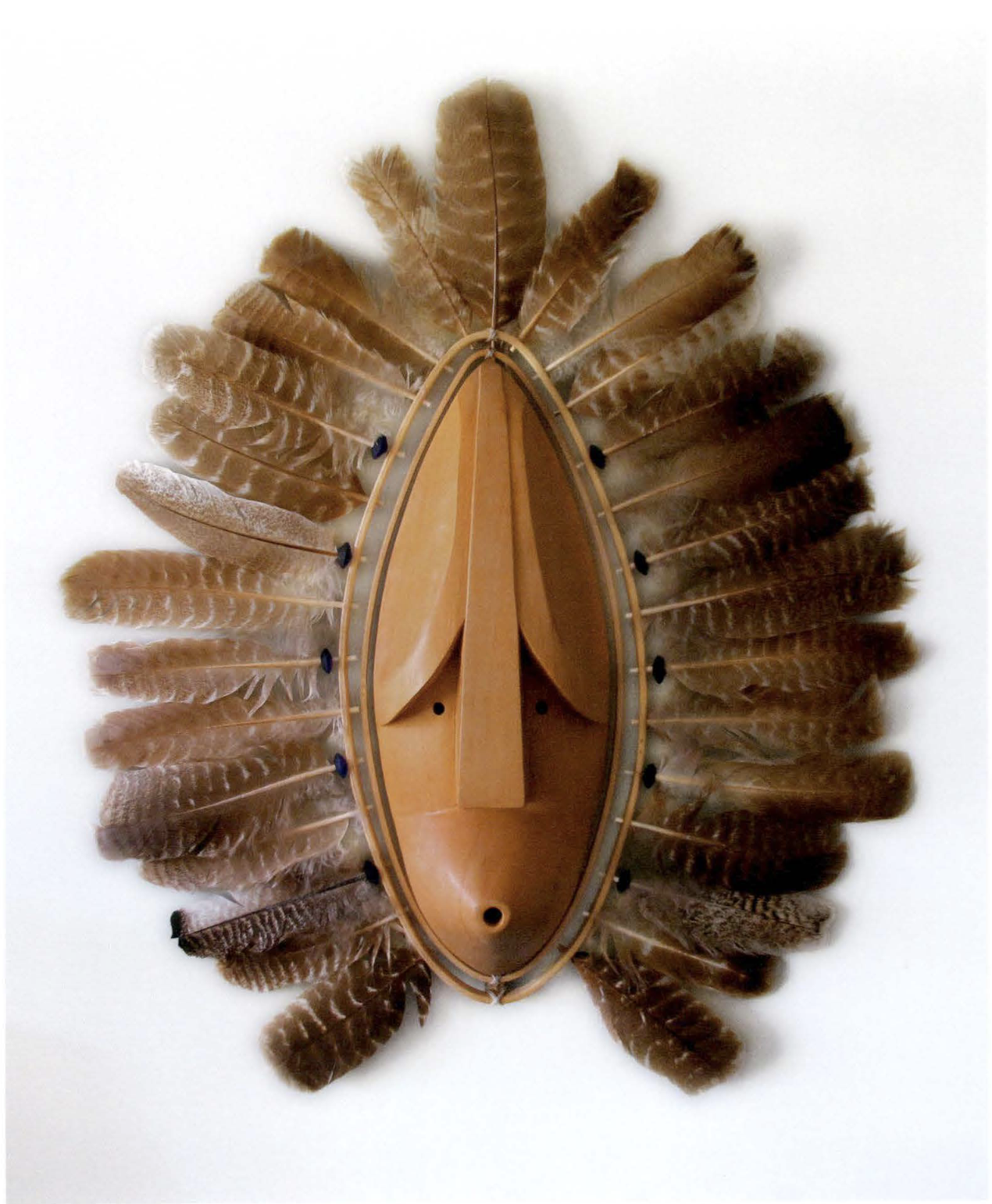
Alaskan artist Perry Eaton and Colin “began by speaking about one of Perry’s masks called “Yellow Singer,” carved from yellow cedar in 2004. “Yellow Singer” is a stylized bird with a mouth that looks as if it’s whistling and a halo of beautiful feathers. In shape, “Yellow Singer” echoes one of the masks acquired on Kodiak Island by French linguist and ethnographer Alphonse Pinart in 1871. These masks were transported back to France and eventually deposited by Pinart in the Chateau Musee in Boulogne-sur-Mer, France, where they are now on display.”
Colin Browne: “Yellow Singer” has a very beautiful, quizzical look on his face, which, I confess, makes me see him as a poet.
Perry Eaton: I think I can understand that. “Yellow Singer” is a type of mask made to be danced, with a whistle that sends sound between the worlds.
Issue 3.20 (Spring 2020)
In “Unfinished Business: Louis Riel, Louis Riel, and the ‘Song of Skateen’” Colin notes, “Voice is at the heart of this opera” and then he asks the key questions, “Who gets to speak? Who remains silent?”
Issue 3.29 (Summer 2016) Eye to Eye
In the Eye to Eye 2016 issue, Colin asks “What Is Not Visible” as he examines an 1873 colonial photograph in which the camera has “rendered its subjects visible and invisible at the same moment.”
And not to forget, Colin is a truly glorious poet. Most recently in the TCR anniversary issue 3.38 (Fall 2022) is his poem, “Questions and Spoils.” Here are the final two stanzas:
Retired union guys talking politics

at the midsummer street party

punctuating with hot dogs

beneath the Mays

grandkids at the egg toss

a vocabulary that just cuts

through the crap.


On such a morning

comes a warbler.

Will you waltz with me, Mother Earth?

How may I make myself worthy


Bravo and countless thanks, Colin!